BLOGGER TEMPLATES - TWITTER BACKGROUNDS »

Sunday, October 14, 2012

TDoR planning ~Sevan

This year is the first year that my support group is heading a “Transgender Day of Remembrance” (TDoR) event.  We’re working hard to make it a community involved event. We've come such a long way in such a short amount of time. Just a year and a half ago we didn't know anyone in town and had no connections to the LGBTQ community. We started our support group and have worked hard to be a presence and a part of the larger community. I tried to get the group to create a TDoR event last year but since we’re somewhat democratic, the group didn't really want to create one. I was upset at the time because I feel it’s our duty to remember those that we've lost, and lead the way in such an event. Looking back however; I’m really glad that we didn't plan an event last year. We didn't have any connections with anyone, and didn't have a large enough group (or funds) to create a successful, well attended event.

This year we've been planning and thinking since PRIDE back in June. Not “officially” but really thinking about it critically and working toward it. Yesterday was our first planning meeting and while I wish we didn't have to plan any such event…I’m excited for the opportunity to step up and create something that will bring awareness and education. We've gotten some great support from local organizations and I’m so happy that they want to help create this event, and work with us to make it successful.
We will have some speaking, a reading of names of those we've lost and then some educational games. We’re planning to have food and drinks and hopefully people will mix and meet each other. There’s often so much segregation between schools, different organizations, different orientations and genders…and I really seek to bridge that. I believe this event can work toward that goal. At least help us take one step. 

Monday, October 8, 2012

Gender variant acceptance ~Sevan

As an androgyn/gender variant/non-binary type person; I’m used to having people “not believe” in my identity. What I am often shocked by, is when I hear people’s identity come into question even in trans* spaces. I’m shocked to hear someone else; who has been fighting for recognition of their own identity turn around and do the same thing to someone else.
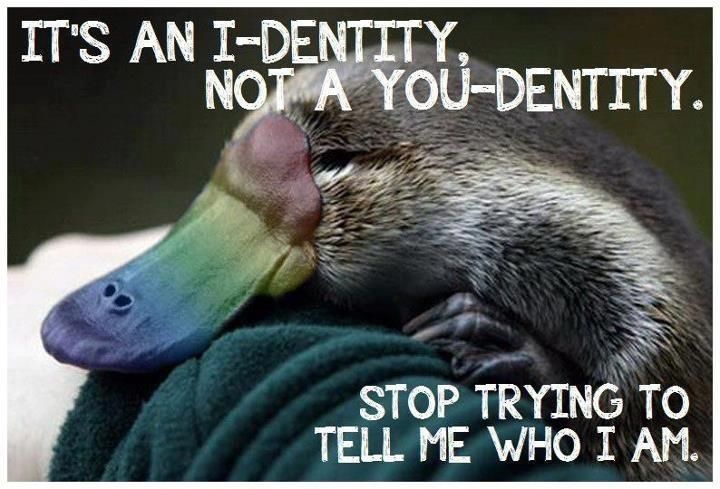
I thought that gender identity was in our minds? That’s what I teach at my presentations and that’s what I talk about here.

I have had people tell me that they accept gender variant identities…but clearly I’m male, and should come out as such. I've had people tell me that they accept my gender variant identity….but that other person over there…not so much.

I think the whole thing comes down to perception, and expression.

I can’t speak for other gender variant folks (though I’d REALLY love to hear from them on this topic!!!) but for me; expression of my gender is a funny thing. It’s HARD! It takes far too much work and forethought. Since there is no “gender variant” section in the clothing store…I have to make it up as I go along. I can’t ever take for granted that my presentation and my intention will be read correctly or as I meant for it to come across.

If I dress in men’s clothes without binding, it doesn't usually read as “gender variant” it reads as “dyke”. If I dress in men’s clothes and bind…I may be read as cis-male. (this never ever happens. I usually still get read as “dyke” but it’s within the realm of possibility…)

If I dress in woman’s clothes then I’m read as cis-female. (even though such attire is sometimes just as uncomfortable and unfitting of my gender identity as male clothes)

You see!? I can’t win!!! How can I possibly dress in a way that would express to you, the general public…that I’m androgyn? When I dress in skirts and men’s shirts with a nice tie I’m viewed as just…somewhat strange. It still doesn't read as what I’m going for.

As such… I've given up trying to be “read correctly” because this identity…it isn't about you. It’s all about me. Being comfortable with myself, being my best self, being comfortable in MY skin.
On the flip side of that…personally I don’t want to be a “gender warrior” every. Single. Day. Of my life. It’s exhausting. It’s tiring. I can’t do it. I just can’t. I commend those who are able, those amazing people. So you may come across me on a day where I’m wearing one of my other passions on my sleeve. Love, Equality, Bi rights, HIV advocacy…when my gender is on the front; I often can’t talk about anything else. Just like the rest of you; I AM more than my gender.

Sometimes going out to a restaurant or new space with new people I’m not familiar with; I dress “female” because I may not want to come out via my dress and attire. It might not be safe, it might not be appropriate. (ie: Work. Mainly.) Most often; it’s not understood without me explaining.

I have searched myself, gone through hours and hours of therapy, I have TRIED to fit within the binary. Don’t you think it would be easier for me to do so? I sure do!! I've tried. Believe me I've tried. I've thought ever awful thing possible about my own identity. Then I came to terms with myself, and did what I needed to do to express myself, feel comfortable within myself and present to the world as much “me” as I can.
This was not an identity I came to lightly. Transition; especially at a time when gender variant transition wasn't even written about…was not easy. My gender identity is no more about clothes and style than any other. That’s only what you can see. There’s FAR more to me than what’s on my skin, or how I interact with people, or what my energy might express.

Since I can’t wear my entire wardrobe every day; you’re not seeing the whole of my self expression on any given day. Same goes for any other gender variant person. Step back and look at everything you know about the person. Then; take them at their word. We do the same for the rest of our community. 

Tuesday, October 2, 2012

Why we use the asterisk ~Sevan


So, if transgender is an "umbrella term"...what's the need for "trans*"? 

Simply put; there shouldn't be a need for it. However; there is. Transgender is often shortened to trans and can be interpreted as trans-male or trans-female, and many gender variant/non-cis identified people feel left out or unsure if their identity is included and being thought about. 

When I see a blog post, article or other written materials that don’t have the asterisk I wonder if they are including me and those like me. If I see a support group, brochure about transgender identities or an advertisement about a presentation that doesn’t use the asterisk I wonder if I’m welcome in that space.

My understanding is that the asterisk came from internet search structure. When you add an asterisk to the end of a search term, you’re telling your computer to search for whatever you typed, plus any characters after. Such as: trans*-gender, -queer, -sexual, etc. No idea if that’s the truth of the matter…but that’s the general “mythos” behind where the asterisk came from.

So if you, or your organizations is trying to be open and accessible by all trans* people; make sure to use the asterisk to verify to all people that you have taken the time, and intention to invite and welcome all trans* people.

Even within my local trans* support group; our name has “trans*” in it; Spokane Trans* People. All of our educational materials and presentations have trans* in it. We are committed to being open to all in the umbrella. 

Sam over at itspronouncedmetrosexual.com posted about this, and created this awesome graphic.  Click it to see his take on it.

Friday, September 28, 2012

Coming out pt 4 Hearing it ~Sevan

We've shared personal stories in part one and two; we've talked about steps involved in coming out in part three; now it's time to talk about how to handle someone coming out to you.

Similarly to our “part 3”, there’s no way I can speak to every individual circumstance. Though I’m hoping I can keep it broad enough to cover as many experiences as possible.

In no way is everyone who’s trans* like me. So they’re not necessarily going to respond how I would…keep that in mind as well.

When someone comes out as trans* to you, it may come as a complete shock. Many trans* people try very hard to fit within binary ideals. Being “big strong men, who don’t cry, might have military background, etc etc” or being “very feminine, girly, home-maker, etc” (though this is less likely thanks to the wide acceptance of “what is feminine”)

If you take one thing from this blog post; please hear this: They did not do this to hurt you. In fact, this isn’t about you at all. They love you, might look up to you, respect you and genuinely want to keep a relationship with you. Otherwise, they wouldn't come out at all; they’d just leave your life.

They may have already come out as gay or lesbian, or may be married and/or have children. You may have long history with this person; might be their spouse or parent! Everything you already know about this person could be in direct opposition to what they’re now telling you about themselves. You may want to argue with them, and try to tell them how you see them. Try to avoid this, if possible.

For transsexual adults; they have usually done everything in their power to keep from transitioning. So asking if there’s something more that could be done to keep from transitioning will only be met with the answer “no” So keep from asking that, if you can.

Hopefully, the person who is coming out to you has read my last post, or similar information about coming out. They've thought long and hard about how you might react. Fear of you reacting poorly could have had a hand in them not coming out much sooner. Parents, friends, family and spouses are very important to trans* people. As much so as anyone else.

I don’t want to put too much emphasis on “what not to do”; because I don’t prefer to be negative. Whether your friend or loved one sits you down for a face to face, a phone conversation or sends you a letter/email; they have thought through this; and chose the method that made them most comfortable, and hopefully thought through the method you would respond best to.

When I came out to my parents; I did so via email. I feared this wouldn't be the method they’d respond best to; but it was what I needed to fully express myself, explain myself, and include some links that I thought might be helpful. I wanted to be able to express myself fully and correctly. I thought they would likely respond best to a face to face, but when I thought over that at great length…I felt there was no way I’d be able to hold my own in that conversation and get all of my thoughts out. As my anxiety rises, my ability to express clearly dwindles. This was a situation where I needed to be perfectly clear. That’s why I chose email.

For my sisters, I did find a way to sit down face to face. There was far less anxiety for me in talking to my sisters than talking to my parents. So each person in my life was unique, and the way I approached them was unique.

What you say first will set the tone for the future. Watch your words carefully. If you can’t think of a kind response; it is ok to say “This is a lot to take it. I need some time to process before I talk about this again.”
That might be rough for your friend or loved one to take in, but it’ll go far better than what could quickly escalate. Emotions run high when coming out. Of course if you’re supportive and happy for your friend or loved one, share that information right away!

Learn all that you can about what it is to be transgender. Find support for yourself if you need it through PFLAG meetings or transgender support groups that might be open to SOFFAs (Significant Others, Friends, Families, and Allies) Find books on the topic, documentaries or local educational presentations. Seek out a therapist to talk to about your feelings if you need support. Your trans* loved one is dealing with quite a bit, and it would be a huge stress relief to have you educate yourself and not rely on them solely for your education about all things trans*.

Be honest about your boundaries. If your friend or loved one is talking about nothing but transgender topics or transition; you may need to gently say,

“I need some space from that topic. Can we have a “transition free day/group of days?”
Those around the trans* person often go through a process of transition themselves. New name, new pronoun, new look. It can be a lot to take in. Be honest about your needs, but if it’s support you need, find online venues; such as susan.org or Trans Family Spouses yahoo group. Both are in the side bar. There is also SOFFA* Support online: http://soffa.transmentors.org/

Or local support groups or therapists; sometimes it’s good just to be able to talk to someone openly. Try to avoid going to your trans* loved one to provide you support.

If you are unable or unwilling to be there for your loved one through their transition, it is best to be honest about that. While I hope that relationships can always be maintained, that’s not always possible. I believe its best not to drag such things out. It just elongates pain. That’s not to say that you should throw your relationship away at the first sign of difficulty; but sometimes it really is best for all people involved to just, walk away. Only you can know if you’re at that point.

Above all, be honest about your feelings and your process. Let your friend or loved one know where you’re at. There’s nothing worse than being in the dark about where we stand. Fearing that we’re going to lose someone from our lives; when really that person just needs some support and some space; is a pretty terrible feeling. They've been honest with you about who they are, and where they’re at. 

Wednesday, September 26, 2012

Coming out trans* pt 3 Saying it ~Sevan


Cyndi and I have both told our personal stories around coming out. Now comes the most difficult post in our four part series. Suggestions and thoughts about the process of coming out. 

Let me first say that there is no possible way I can account for every unique situation...so I'm going to do my best to keep this broad. There's no one right way for every person to come out. There just isn't. Since my experience is primarily with transsexuals/transitioning…I think my focus will be there. Not because I’m trying to ignore the rest of the umbrella, but because I want my advice to be sound, and based on personal experience/ knowledge.

The first thing I would suggest...is to understand what transgender identity is for you. Those who you come out to will want to know if you intend to transition, what that might look like for you, what surgeries or hormones you might undergo, etc. While "I don't know" is a perfectly reasonable response, it tends to upset those you're coming out to. So either be prepared for an afterthought to your "I don't know" or prepare an alternative. 

*Nothing* is ever set in stone. Ever. Especially not transition! It's a path, it's a journey, and minds can change along the way. Prepping those around you for these potential changes is highly advisable. You may decide early on that SRS is required and very necessary, but along the way may decide that it's either not desired, needed or affordable. You may be against top surgery (especially trans woman, much more so than trans men) but find that hormones don't offer what you wanted/needed; and suddenly top surgery appears very likely. 

Some, (such as families) can have a very hard time with transition, and they may need support as well. Knowing where to direct them can help them to help you. Such as:
There are also books on the topic, but I'm much more for personal conversation than reading myself. I'm sure you can find some books if the person you're coming out to is a reader. 

While many would say “Be prepared to lose everyone and everything” to transition…I prefer to be a little more hopeful. I think when we go into conversations with a defeatist attitude…we end up losing. We have already gone through the loss in our own heads and I do agree that one should be prepared for every eventuality; that includes success and support!! That *is* a very possible outcome!

I think that coming out takes some soul searching as preparation. Many don’t do this. I know I didn’t…I waited until I was backed into the wall, mid transition; with my voice already changing…that’s when I came out to my parents. It should come as no surprise that that didn’t go very well! I left them out. I expected them to be unhappy, and they met that expectation.
Take some time to remember what it was like when you *very first* discovered you were trans*. What did that feel like? What did you want to hear? What would help you through that? I know for many (if not most) that this is a painful discovery. Of course we want unconditional love and support. I know some people who have gotten that reaction; and what a blessing! For most though; just like for us trans* people, it’s a process. It will take some time for those you’ve come out to; to come around.

Boundaries are a difficult thing for majority of trans* people. (It’s even mentioned in the Standards of Care!) If you are working with a qualified gender therapist; coming out should definitely be a topic to go over with them. As you will likely be the only trans* person your friend/family will know…they are pretty likely to bring their feelings and process to you. (or if they’re like my parents, the exact opposite and bring nothing to you.) They need to find other places to express their feelings about your transition so that the process doesn’t damage the relationship. This is where strong boundaries come in. Being able to encourage them to take those feelings to a support group, or trans* mentor (if your area has such a program) online forum…somewhere. Especially if they’re having negative feelings they need to process.

With that, accept some boundaries that your friends/family needs to set. I know that early on (heck…often times; still!!) Cyndi and I talked about transition pretty much to the exclusion of all else. That’s taxing for many people. There might need to be some boundaries set around that. I think that compromise can be healthy and contribute to and strengthen relationships. Some compromises are unreasonable and would be harmful. Your therapist can help with these unique and important issues.

Transition can be lonely…but it doesn’t need to be. Support, friendship and family is important to anybody but definitely important for trans* people navigating in an often times cruel world.

Saturday, September 22, 2012

Gendered language ~Sevan

We will get back to our discussion on coming out soon, but I just created this graphic and I wanted to share:

Thursday, September 20, 2012

Coming out Part 2 ~ Cynthia Lee

Coming out take 2 ~ Cynthia Lee


My coming out as Trans* to my friends and family was met with a collective ho-hum. I got many people who reacted in a way that indicated they were not surprised. One of my friends said to me “I knew this about you for years, I was afraid you didn’t know”. Another friend said, “That makes sense. This explains a lot.” Another friend asked, “What took you so long?”

I was rather stunned by these reactions. I thought I had done a fine and dandy job of being manly and macho. I really thought that I had been successfully portraying a man to the world. Now that I have had time to reflect on my life pre transition I see clear as can be that I was dropping hints to my true gender my entire life. All my life I was actually playing the part of a man and doing it very poorly it turns out. I had expected them to attempt to defend my ‘manhood’ and try to convince me I was nuts. I expected the same treatment that most transsexuals deal with. Rejection and transphobia were what I expected but I was given love instead.

In the end I have lost no one to my coming out. All of my family and friends accept me as Cynthia. This was anti-climatic. I had prepared for ultimate rejection and being challenged, or dissuaded from my transition. I had not prepared for being accepted and loved unconditionally. It was very wonderful and awesome that I have kept my friends and family, but I had not prepared myself for this outcome. Person after person that I came out to were ok with me transitioning. In a way, it was a tad aggravating. What do you mean my portrayal of ‘man’ was so lousy that no one was buying it!??! I was so sure of the excellent job of role-playing ‘man’ that when I discovered that it was not excellent it kinda miffed me a bit. Nevertheless, it should come as no surprise. Women are not men and they do a lousy job of being men full time. Sure, some women can play the part of a man for a while, but no woman can live as a man 24/7 and not let her guard down and let the woman inside out on occasion. Turns out that I was showing the inner woman, I was letting her out on a daily basis.

Therefore, my gentle reader I want to boil it down to this: You have no idea if your friends and family will accept you or reject you until the moment of truth. It is worth the chance you take and it just might end with acceptance.